

There is an essential component to the operation of any engine that often goes unnoticed until trouble strikes — the timing chain. But like any component, the timing chain can wear, leading to expensive issues or even catastrophic engine failure.
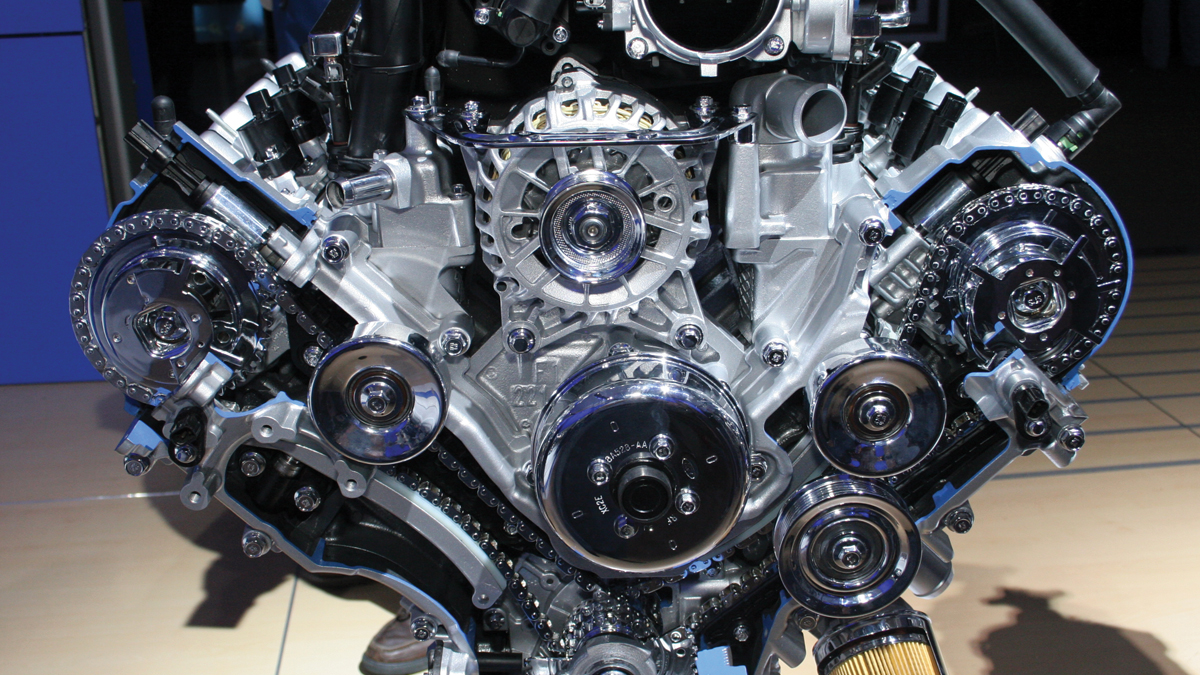
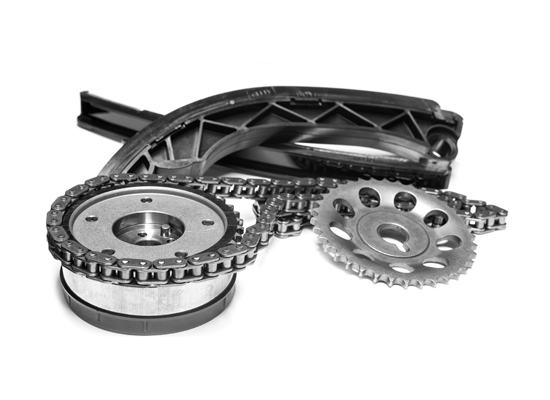
The timing chain provides a mechanical linkage that ensures all moving parts work in perfect harmony. It connects the camshaft, which controls the opening and closing of the valves, to the crankshaft, which is attached to the pistons. In this way, the timing belt ensures that fuel and air enter the engine and exhaust gases exit in synch with the motion of the pistons.

Unlike timing belts, which are made of rubber and require periodic replacement, timing chains are constructed from durable metal links, much like a burly bicycle chain. Timing chains are housed inside the engine where they are protected from contamination and lubricated by engine oil to reduce friction and wear. This design allows them to last significantly longer, hopefully for the life of the vehicle, provided they are properly maintained.
However, even with their robust design, the timing chain is not immune to wear. Over time, factors such as extreme use, insufficient lubrication, soot buildup, high mileage or poor maintenance can lead to issues like chain stretch or damage to the tensioners and guides. These problems can disrupt the engine’s timing, leading to symptoms such as rough idling, engine misfires or even catastrophic failure.
Timing-chain stretch
Timing-chain stretch, when the chain lengthens beyond its original specification, is a common issue with timing chains. This elongation can disrupt the precise timing of the engine, throwing off synchronization and leading to poor engine performance. The leading culprit? Soot in the motor oil.
Although most people associate soot with old-fashioned diesel engines, modern gasoline-direct-injected (T-GDI) engines can produce more soot than older diesels not equipped with a particulate filter.
Soot can accumulate in the motor oil of T-GDI engines. The tiny particles can agglomerate into larger, wear-causing particles that cause problems inside the engine before the oil filter has a chance to capture them. These particles appear to be causing accelerated timing-chain stretch on some vehicles. In fact, Ford* issued a technical service bulletin (#14- 0194) in 2020 that acknowledged timing-chain wear as a problem in certain vehicles equipped with its popular 3.5L EcoBoost* engine (the problem has since been resolved).

Soot particles can lodge in the tiny clearances between the links and pins of the timing chain. They slowly scour the metal surfaces as the engine is running, enlarging the clearances. After a while, the timing chain elongates. It doesn’t actually “stretch” like a rubber band. Instead, the enlarged clearances between the links and pins create slack, effectively increasing the chain’s length. While the tensioner can take up some of the slack, it has its limits.
If the chain stretches beyond the capability of the tensioner, the camshaft and crankshaft sensors can trigger an engine code and even send the engine into “limp” mode. Other issues include worn sprockets, faulty tensioners and chain slack.
Once slack or damage has developed, it can cause the timing chain to jump teeth on its sprockets, which may result in valve or piston damage and, in severe cases, catastrophic engine failure.
Warning signs
Detecting timing-chain problems early can prevent major repairs down the road. Some of the most common warning signs include…
Unusual noises
A rattling or clanging noise, especially at startup, is often a telltale sign of timing-chain slack or failing tensioners.
Engine misfires or rough idling
A stretched timing chain can disrupt the engine’s firing sequence, leading to misfires or unstable engine performance, particularly during idling.
Check-engine light
If your check engine light comes on, it’s worth investigating whether the timing chain could be the culprit.
Poor performance
A timing-chain problem may reduce engine power, fuel efficiency or overall performance, making it more difficult to accelerate or maintain speed efficiently.





Comments
Brad Nelson is a staff writer for AMSOIL. Outside of work he enjoys family adventures, wilderness exploration and riding/wrenching on vintage metric motorcycles.
Share: